15+ Years of Experience
Verified Moving Team
GPS-Enabled Trucks
Real-Time Tracking
Quality Packing Materials
Affordable Pricing
Safe Vehicle Transport
Secure Warehousing
Insured Shipments
Pan-India Coverage
Careful Vehicle Relocation
Fast & On-Time Delivery
Transparent Quotes
24/7 Support
Corporate Relocations
Home Shifting Experts
Friendly, Trained Staff
No Hidden Charges
Guides
How to Save Money on Your Next Move
Jan 5, 2026
5 min read
By Professional Relocation
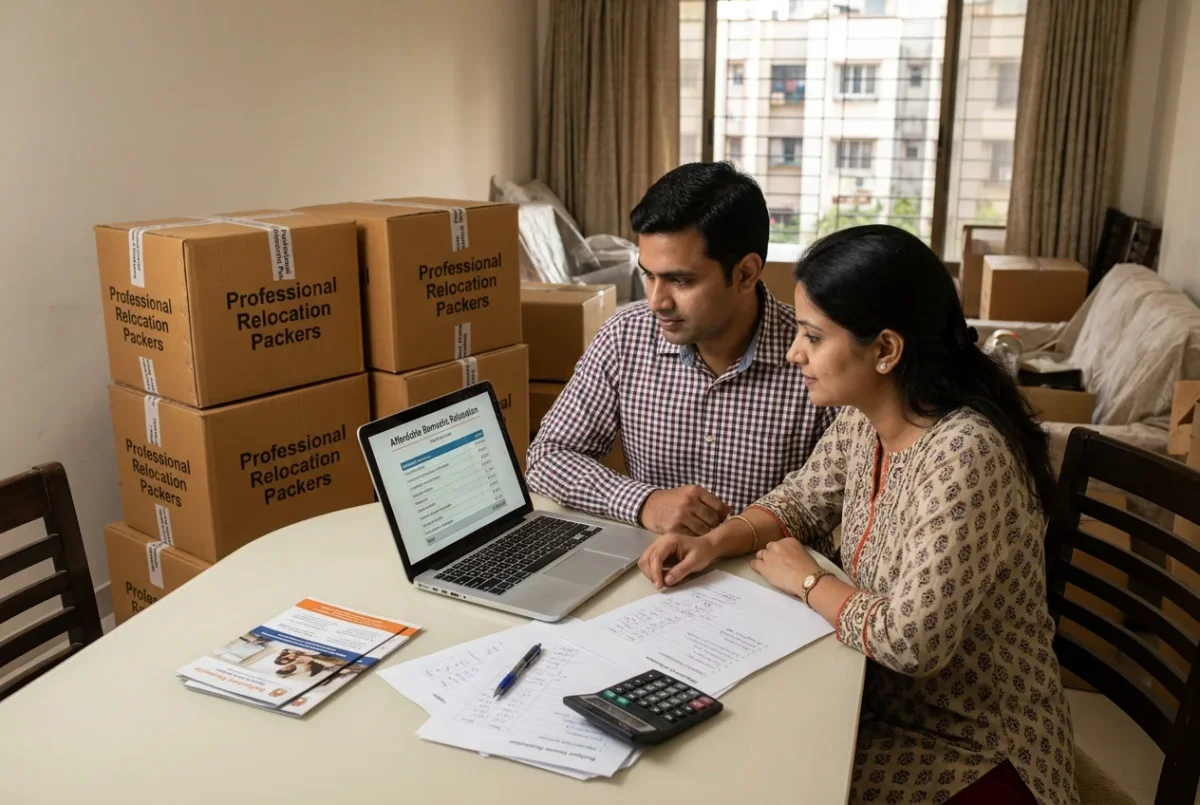
Moving house is one of the more expensive life events most people face. Between professional movers, packing materials, transportation, temporary accommodation, and the inevitable new-home purchases, costs add up quickly. But moving does not have to break the bank. With smart planning and a few strategic decisions, most families can reduce their relocation costs by 20 to 40 percent without compromising on safety or quality. Here is how.
1. Declutter Aggressively Before You Pack
The single most powerful cost-reduction strategy for any move is reducing the volume of goods you transport. Moving companies charge primarily based on weight or volume, so every item you do not move saves you money directly. Start the decluttering process at least 6 to 8 weeks before your move date to avoid rushed decisions.
Go room by room and sort every item into four categories: keep, sell, donate, and discard. Be ruthless — if you have not used something in a year, you probably do not need it. Old books, duplicate kitchen items, clothes that no longer fit, outdated electronics, furniture that will not suit your new home, and seasonal items you rarely use are all candidates for removal.
Sell items through OLX, Quikr, or Facebook Marketplace — used furniture, appliances, and electronics in good condition can bring surprisingly good prices. Host a garage sale. Donate to local NGOs, shelters, or religious organizations. The money you earn from sales can offset a significant portion of your moving costs, while the reduction in moving volume directly reduces your quotes from packers and movers.
2. Get the Timing Right
When you move matters as much as how you move. Packers and movers companies — like all service businesses — have peak and off-peak periods. Understanding this seasonality can save you 15 to 25 percent on your moving costs.
Peak moving times include: month-end and month-beginning (when most leases turn over), the first and last week of each month, weekends year-round, and summer months (April through June) when families try to relocate before the school year. Moving during these periods commands premium rates because demand is high and vehicles and crews are fully booked.
For maximum savings, move mid-month on a weekday. Tuesday, Wednesday, and Thursday are typically the cheapest days to move. Moving companies often offer meaningful discounts for off-peak bookings. If you have the flexibility — particularly if you work from home or can arrange a flexible move date with your employer — take advantage of this opportunity.
Book your moving company as early as possible. Last-minute bookings almost always cost more because you lose negotiating power and may be limited to premium slots that remain available. A booking made 3 to 4 weeks in advance typically secures better rates than one made 3 to 4 days out.
3. Get Multiple Quotes and Negotiate
Never accept the first quote you receive. Get written quotes from at least three different companies and use them as negotiating leverage. When you have multiple competing quotes, most reputable companies will work to match or beat a competitor's price for equivalent service. Be transparent — tell each company what quotes you have received and ask if they can do better.
When comparing quotes, ensure you are comparing equivalent services. One company may quote a lower headline price but exclude packing materials, transit insurance, or floor-level charges that another company includes. Request fully itemized quotes and compare the totals for equivalent scope before making a decision based on price alone.
Ask specifically about any available discounts. Some companies offer discounts for: seniors, government employees, military personnel, customers who book within a specific window, or customers who can be flexible on exact dates. Discounts are rarely advertised but are often available to customers who simply ask.
4. Use a Hybrid Packing Approach
Full packing service by professional movers is convenient but adds significantly to the cost. Full DIY packing saves money but requires more of your time and carries higher risk of damage for fragile or complex items. The smart middle path is a hybrid approach that gives you the best of both options.
Pack yourself: books (heavy, not fragile), clothing (can go in wardrobe boxes, suitcases, or bin bags), bedding and pillows (compression bags work well), toys, games, and non-fragile decorative items. These items are low-risk and straightforward to pack without professional expertise.
Let professionals pack: kitchen items and glassware, electronics and appliances, artwork and mirrors, antiques and collectibles, and any items for which you do not have the right materials. This targeted professional packing protects your highest-risk items at a fraction of the cost of full packing service.
Source your packing materials smartly. Liquor stores, bookshops, and supermarkets often have surplus cardboard boxes they give away free. Wardrobe boxes and mirror boxes can often be borrowed from friends who recently moved. Save packing materials from online purchases and deliveries in the weeks leading up to your move.
5. Move Non-Essential Items Separately
Not everything needs to go in the moving truck. For local moves, consider moving small valuable items personally in your car across multiple trips before moving day. Books, clothes, kitchen items, and other non-fragile goods can be transported incrementally, reducing the truck space you need and therefore the cost.
For small volumes of goods, check if courier companies or cargo transport services offer a more economical rate than a full packers and movers company. For interstate moves where you have a relatively small volume of goods, many courier companies now offer door-to-door cargo transport that is significantly cheaper than traditional packers and movers for small loads.
Consider whether any large, bulky items are actually worth moving. Large sofas, old wardrobes, and outdated mattresses often cost more to move than they are worth. If the item is old, heavy, or unlikely to suit your new home, sell or donate it and purchase a new one at your destination. New furniture in India is often remarkably affordable, and factoring in the transport cost of moving old furniture can make replacement the smarter financial decision.
6. Understand What You Are Paying For
Hidden charges and misunderstood quotes are among the most common sources of moving cost overruns. Understand in detail what your quote includes and what might trigger additional charges. Common additional charges include: extra floors or no-elevator access at either location, long carry distances from the building to the truck, bulky or oddly shaped items, shuttle services when large trucks cannot access narrow streets, storage if there is a gap between move-out and move-in dates, and peak date surcharges.
If your move involves any of these situations, disclose them to the company during the survey and request that they be included in the binding estimate. It is far better to negotiate these details upfront than to discover them as line items on the final invoice.
Always read the contract carefully before signing. Understand the payment terms — when the advance is due, when the balance is due, and what happens in case of damage or delay. A contract that protects your rights is worth more than a slightly lower headline price from a company with vague terms.
7. Plan for Your New Home Before You Arrive
A significant source of post-move expense is the "we need this immediately" purchases that happen in the first days in a new home. Without preparation, these urgent purchases often happen at full retail price with no comparison shopping. Avoid this by planning your new home needs methodically before you move.
Walk through your new home (or review detailed photographs if you cannot visit) and note what you need: curtains, curtain rods, extra shelving, kitchen organizers, bathroom fittings, light fixtures, additional furniture. Make a comprehensive list and purchase these items in advance with time for comparison shopping, or schedule them for purchase after the move when you have time to find the best prices.
Identify what you already own that will serve double duty in the new home. A dining table can serve as a temporary desk. Boxes can serve as temporary shelving. Being resourceful with what you already have avoids expensive impulse purchases in the first disorganized days after moving.
8. Don't Cut Corners on Insurance
One area where you should not try to save money is transit insurance. The cost of comprehensive transit insurance is typically 1 to 1.5 percent of the declared value of your goods. For a household worth ₹5 lakhs, this is ₹5,000 to ₹7,500 — a small fraction of your overall moving costs. Without insurance, a single damaged appliance, broken television, or cracked mirror can cost more than you saved on the entire insurance premium.
Some movers include basic carrier liability insurance in their quotes, but this only covers damage caused directly by the mover's negligence and is typically limited to a very low per-kg rate. Upgrade to full-value comprehensive insurance for complete peace of mind.
What Not to Cut
While there are many ways to reduce moving costs intelligently, there are areas where cutting costs is false economy. Do not hire an unverified or unlicensed company just because they are cheapest — the risk of theft, damage, or hostage goods is real. Do not skip transit insurance — the cost of a single damage claim almost always exceeds the insurance premium. Do not use inadequate packing materials for fragile items — the savings on materials will be consumed by a single breakage claim.
The goal is not the lowest possible moving cost — it is the best possible value. A slightly higher investment in a reputable company with proper insurance often results in a smoother, faster, and ultimately less expensive move than the cheapest option that turns into a costly nightmare. Move smart, plan ahead, and your relocation budget will thank you.
Moving Budget
Save Money
Affordable Moving
Cost Tips
Relocation Guide
Professional Relocation Editorial Team
Relocation Experts • 2009 – Present
Our editorial team consists of experienced relocation professionals who share expert advice to help you move smarter and stress-free.
Ready to Move?
Get your free moving quote today. Our experts will plan your entire relocation — hassle-free and affordable.
No obligation • Free estimates • 24/7 support